
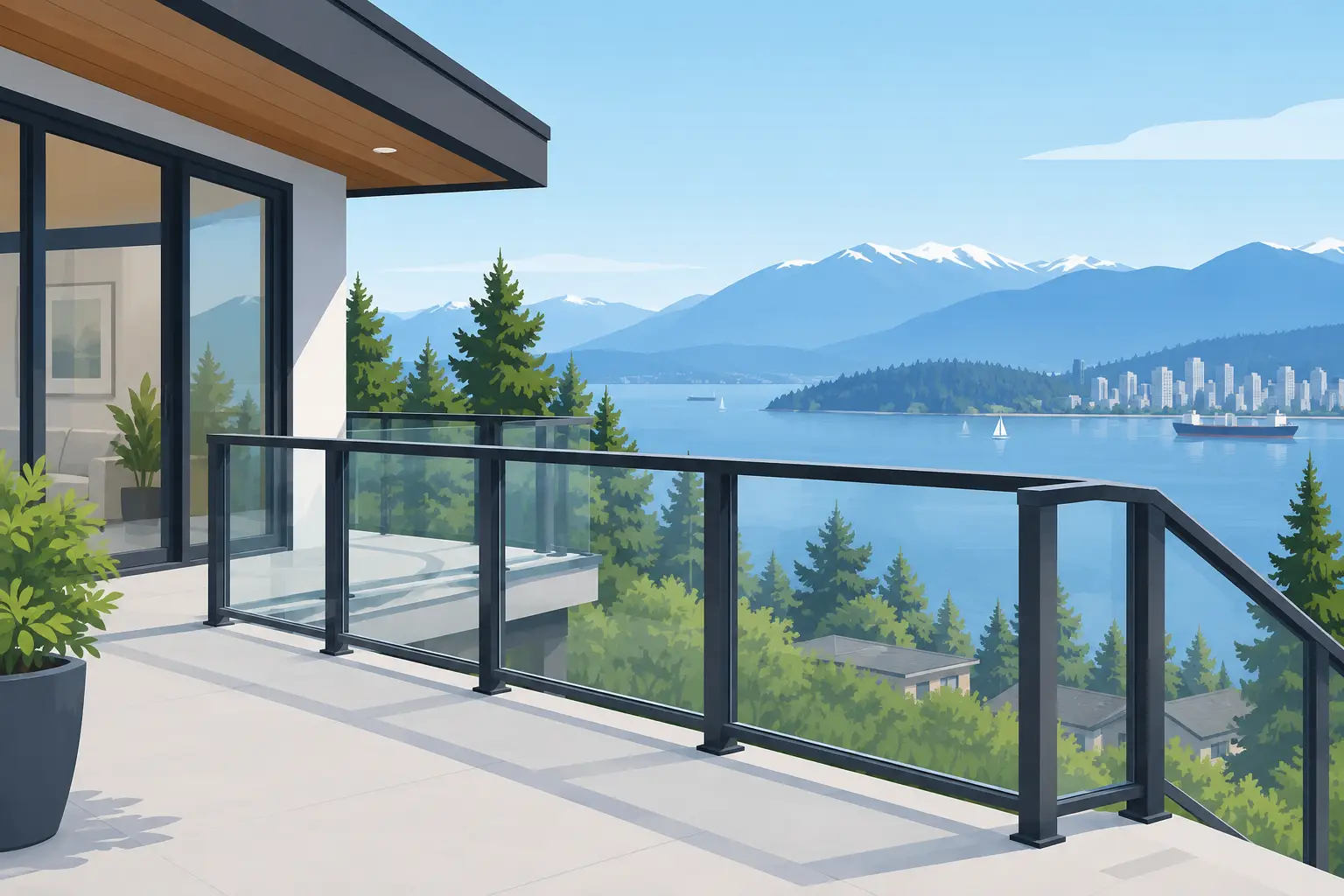
A balcony railing has to do more than look good from the street. It has to protect the people using the space, stand up to wet Vancouver seasons, and suit the proportions of the home. That is why custom aluminum railings Vancouver property owners choose are built around the actual deck, stairs, balcony, or entry – not selected from a one-size-fits-all shelf.
For a homeowner, the right railing can make an older exterior feel current and finished. For a contractor or designer, it can solve practical site conditions without sacrificing the architectural intent. The key is making decisions in the right order: safety and code requirements first, then layout and mounting, followed by style, infill, and finish.
Start With the Space, Not the Railing Style
A railing that works beautifully on a front entry may not be the right system for a second-story balcony. Before choosing pickets, glass, or a color, look closely at how the area is used and what the existing structure can support.
Decks and balconies need guardrails that meet applicable height, opening, and loading requirements. Stairways need continuous handrails that are comfortable to grip and properly positioned. A low garden wall, by contrast, may need a simple decorative barrier rather than a code-required guardrail. These distinctions affect post spacing, mounting methods, top rail design, and the type of infill that can be used.
Local conditions matter as well. Metro Vancouver properties commonly deal with rain, shade, moisture near landscaping, and exposed coastal air. Aluminum is a practical choice because it does not rust like steel or iron. When fabricated with welded construction and protected with a quality powder-coated finish, it provides a clean, low-maintenance solution for exterior use.
Ask What the Railing Needs to Accomplish
The same property can have several railing needs. A rear deck may call for an open view toward the yard, while a front stair needs a secure handrail and a more traditional visual presence. A rental property may prioritize durability and straightforward maintenance, whereas a custom home may require a railing that aligns precisely with window lines, exterior trim, and gate details.
A made-to-spec approach is valuable because dimensions are rarely perfectly uniform. Existing concrete landings can slope, deck edges can vary, and stairs may not land at standard angles. Custom fabrication allows the rail system to follow the site rather than forcing the site to accommodate a prefabricated product.
Choosing an Infill: Pickets, Glass, or a Custom Pattern
The infill is the most visible part of a railing system, and it largely determines the final look. It also affects privacy, sightlines, cleaning needs, and budget.
Aluminum Picket Railings
Vertical aluminum pickets remain a strong choice for many homes and commercial properties. They create a clear, orderly rhythm, provide dependable safety, and suit both contemporary and more traditional architecture. Black picket railings are especially popular because they frame a deck or entry without visually overwhelming it.
Pickets are often the practical choice for properties with active children, pets, or high-use exterior areas. They are durable, easy to maintain, and less likely to show water spots than glass. They also work well where privacy is not a concern and the view is not the central feature of the space.
Tempered Glass Railings
For decks, balconies, and patios where the view is part of the property’s value, glass can be the better fit. Clear 6 mm tempered glass panels preserve sightlines toward gardens, city views, or surrounding green space while giving the exterior a modern, elegant finish.
Glass does involve trade-offs. It needs occasional cleaning to maintain its clarity, particularly after long rainy periods or near trees and landscaping. The supporting aluminum frame and mounting system also need careful planning. Yet for a compact balcony or elevated deck, a glass railing can make the usable area feel more open than a picket system would.
Custom Decorative Designs
Some homes benefit from a more tailored pattern, such as horizontal elements, geometric details, or panels that coordinate with a custom aluminum gate or fence. This option is especially effective when the railing is visible from the street and needs to contribute to curb appeal.
Decorative work should still respect the functional requirements of a guardrail. A design may look open and light, but the spacing, connections, and overall construction must be appropriate for the application. Good fabrication balances that engineering discipline with the visual details that make the project feel specific to the home.
Powder Coating Is More Than a Color Choice
The finish on an exterior railing does real work. Powder coating is applied to provide a durable protective surface that holds up better than standard paint under regular outdoor exposure. It also gives homeowners and design professionals the flexibility to choose a color that supports the property’s overall palette.
Black, white, bronze, and gray are common choices, but custom colors can be appropriate when a railing needs to match window frames, fascia, exterior cladding, or commercial branding. A dark railing can create sharp contrast against light siding. A softer bronze or custom neutral may blend more naturally with wood, stone, or earth-toned finishes.
Finish selection depends on the setting. A dark matte finish is often forgiving and contemporary, while a lighter color can brighten a covered entry or complement a white exterior. If the railing will sit next to metal gates, fencing, or patio covers, selecting a coordinated powder coat creates a more intentional result across the property.
Mounting Details Shape Safety and Appearance
A railing can be surface-mounted on top of a deck or concrete slab, or fascia-mounted along the outer edge of the structure. Neither method is automatically better. The right choice depends on framing, waterproofing, usable deck area, and the look the owner wants to achieve.
Surface mounting can be a straightforward option when there is a sound structural surface and adequate room for posts. Fascia mounting may preserve more floor space and create a cleaner edge, which is useful on narrower balconies or compact decks. On concrete, installers need to assess the slab condition and use mounting methods suited to the structure.
These details should not be left to guesswork. A professional site measure identifies obstructions, slopes, transitions, and structural considerations before fabrication begins. It also helps avoid awkward last-minute adjustments around doors, steps, downspouts, or existing trim.
Why Professional Fabrication and Installation Matter
Railing projects often look simple until they reach the field. A small error in angle, post location, or mounting height can affect appearance, safety, and compliance. Professionally fabricated welded aluminum railings provide consistent connections and a more refined finished appearance than loosely assembled systems.
Installation is equally important. The railing must be secured to suitable structural backing, aligned cleanly across changing grades, and finished with attention to transitions. This is particularly important for stair handrails, balcony guards, and commercial settings where code requirements and daily use leave little room for compromise.
Empire Aluminum Works Ltd. brings more than 35 years of local fabrication and installation experience to these decisions. That experience matters when a project needs more than a standard railing – such as a sloped stair run, a glass system around a complex deck layout, or matching railings, gates, and fencing across one property.
Plan for the Long Term
Aluminum railings are low maintenance, not no maintenance. A periodic rinse with mild soap and water helps remove dirt, pollen, and surface residue. Avoid abrasive cleaners or harsh tools that can dull the powder-coated finish. Glass panels benefit from routine cleaning with a non-abrasive glass cleaner, especially where rain spotting is noticeable.
It is also wise to inspect railings after severe weather or impact. Check that posts remain secure, fasteners are in good condition, and gates latch properly. If an existing railing has been damaged, loosened, or altered during deck repairs, professional railing repair can often restore safe performance without requiring a complete replacement.
The best time to discuss a new railing is before a deck, balcony, or exterior renovation is fully underway. A careful measure and clear design conversation can turn a necessary safety feature into one of the strongest architectural details on the property.
Leave a Reply